Added to this diverse mix of cultures that co-exist within Malaysia, the country is bordered by Singapore and Thailand that add more influences in terms of their food cultures and traditions.
Complicating things further Malaysia has been conquered, colonised and ruled by the British, Portuguese, Dutch, Japanese and then the British once again. The impact of the presence of these countries food cultures are obvious in Malaysia, and this has had a long, lasting impact on the local food culture.
Returning from India to Australia in mid February, I took advantadge of my Malaysian Airways flight that is directed from Bangalore to Adelaide, via Kuala Lumpur by making a five day stopover in 'Malaysia, Truly Asia' (as their tourist adverts proclaim!)
Prior to this trip, I visited Malaysia in 1996, which means it had been 14 years since the last time! I took this opporunity to delve deeper into the country - and when I say deeper - yes I mean deep into their foodways. I stayed with my freind Kelly Gonsalves who is from the city of Klang - about a forty mintute drive from the capital. Kelly was excited to show off Malaysia's vibrant food culture. There are countless "mamaa" (street hawker/food courts) shops within walking distance of every major city, each usually specialising in a particular kind of dish. On my whole five day trip I did not eat at a single formal restaurant, or try anything un-Malaysian, it was five days of eating like a local - and I loved it all!

Thosai: This comes straight from India. This Malaysian dosa is a fermented sourdough flatbread. Resembling thin pancakes made from black gram, rice flour and rice soaked in water for several hours or overnight - for it's sourdough taste it is served with sambar [- a savory gravy or stew made with vegetables and dhal (yellow lentils), and a chutney of some sort, usually made from fresh coconut.

Nasi Lemak is a coconut-flavored rice meal where the rice is cooked in coconut milk made aromatic with pandan leaves. It is typically served with Sambal Ikan Bilis - fried dried anchovies cooked in a dry sambal sauce, and garnished with cucumber slices, hard boiled egg and roasted peanuts.
Traditionally it is packaged in a banana leaf and it is usually eaten as hearty breakfast fare.

Chinese favourites of mine - 100 day old egg and pickled octopus (above) cha siew bun (below)
 Lok lok - Roadside stall with a wide offering of Malaysian street “food-on-sticks” dipped in a pot of boiling water, and eaten with gravy/ sauces.

Bovine traffic


Satay is marinated meat - chicken or beef that are skewered onto bamboo sticks and grilled over hot charcoals. A fresh salad of cucumbers and onions are served together with a spicy-sweet peanut sauce for dipping. Ketupat, a Malay rice cake, is also a traditional accompaniment, great for dipping in the peanut satay sauce.
 Fresh seafood and fish
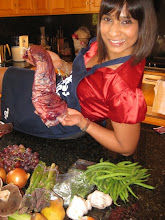
Ikan Pari Bakar: a popular method of cooking stingray or skate wings by marinading them in spices, wrapping them in banana leaves and grilled over hot charcoals. Typically it is served with a spicy sambal sauce with fresh shallots.

Before and after cooking shots of the stingray

Lying within close proximity to the equator Malasyia's climate is tropical with temperatures falling between 20-30 degrees C and humidity at approximately 90 %. Because of the heat and humidity it is absolutely necessary to keep hydrated and Malaysia's many street vendors and stalls sell an array of fruit juices, shakes and smoothies. Being a Muslim country it can be hard to find a cold beer or alcohol beverage to cool off with.
Malaysia annual monsoon season is similar to India, blowing southwest from April to October and Northeast from October to February. When the rain does come down it interrupts the sunshine only briefly as most of it falls in short, strong random bursts.

Chee Chow Fun and Satay

Batter fried Oyster Mushrooms

Chinese New Year Celebrations in full swing

Tea loaded with sugar and milk

Indian style paratha with condiments

Malaysia's all-time favourite quick-fix's are Nasi Goreng (fried rice) and Mee Goreng (fried noodles) cooked Malay style.

Another everyday favorite is a delicious, satisfying noodle dish called Laksa - fresh rice noodles, garnished with fresh cucumbers, onions, lettuce and served in a savory and tangy fish soup or gravy. Curry Mee (below) is very similar to Laksa but with Maggii Noddles and a subtle variation in terms of flavours.

Local Malay Beer - Anchor and refreshing Sea Coconut Drink

Fast food taken to a whole different level. Food court vendors preparing dishes right there in the heat and humidity - doesn't get fresher than this!

Popiah is a spring roll made of wheat-flour into soft, thin crepe like pancakes filled with veggies and pork along with soy, hoisin and shrimp paste. It originates from the Fujian province of China. and today it is popular throughout Taiwan, Singapore and Malaysia.

Claypot Noodles

Oyster Omlette

Me trying to cool off with an Ais Kacang -a favourite dessert as it is known in Singapore. In Malaysia it is reffered to as ABC. Literally it translates to red bean ice as this was what was customarily served along with shaved ice. Today a combination of aloe vera, palm seed, sweetcorn and agar agar form the base topped with evaporated milk, condensed milk or coconut milk along with flavoured syrups.
 Jonker Street, Melaka - filled with street food and shopping vendors
An array of dim sum from street vendors

Taiwanese Sausages - sweet and delicious straight off the hot grill.

Originally eaten as a hearty breakfast Nasi Lemak a meal of rice cooked in santan or coconut milk with a side of Sambal Ikan Bilis (dried anchovies cooked in a sambal), cucumber slices, hard boiled egg and peanuts, and traditionally packaged in a fresh banana leaf.


The Taj Mahal Roti - introduced to me by this local hero (above) after several hours of clubbing into the wee hours of the morning is available only at Mosin. This is a naan that is topped with chicken tikka that glows bright red thanks to insane amounts of food colouring along with onion and cheese. It is a rather strange combination - one that I am not sure I would want to try again. Sorry but one of the few things I ate in Malaysia I was not particularly ecstatic about. Actually scratch that, the only thing I wasn't over-the-moon-about.


Bak Kut Teh is a rich, restoarative Chinese broth available across Singapore, Malalysia, Indonesia, China and Taiwan.
 It literally translates as "meat bone tea" consisting simply of meaty pork ribs simmered in a complex broth of herbs and spices (including star anise, cinnamon, cloves, fennel seeds and garlic) for several hours. The version I ate included offal, varieties of mushroom, choy sum (snow cabbage) , pieces of dried tofu or fried tofu puffs.
Light and dark soy saucein differing amounts determine the flavour, added to the soup during cooking. Garnishings include chopped coriander or green onions and a sprinkling of fried shallots.
Bak kut teh was believed to have been introduced to Malaysia in the 19th century by Chinese workers from either Canton, Chaoshan or Fujia.


Cendol - Customarily eaten after Bak Kut Teh, this is a coconut flavoured dessert comprising shaved ice chips topped with flavoured concentrate syrup and then infused with thin noodles made of green plea flour and sweet red beans, topped thick coconut milk. (Above the process of making it, below the ready dessert.)

Papi Roti - uniquely Malaysian and sheer genius. (The chain has outlets all over the country). These buns are pipped with sweet, subtle caramel flavoured pastry cream. Once baked the cream melds into the top yielding a golden brown crusty top that is ever so crisp and sweet to bite into. Simply delicious when eaten warm!

Mee - the word for noddles in Chinese is ever so popular it has adopted the American Cookie Monster making it the mascot for a local noodle company.

Durian is a pungent fruit (ok, I'm putting it mildly - it's a stinky, ferral fruit) that I fear so much that the sheer smell of it puts me off. It is incredibly popular in South East Asia, especially Singapore and Malaysia, however on my many travels around those regions I have not been able to muster up the courage to try it.

A lion dance about to begin the customary Chinese New Year ritual at a local mall.